

Human Resource Management System
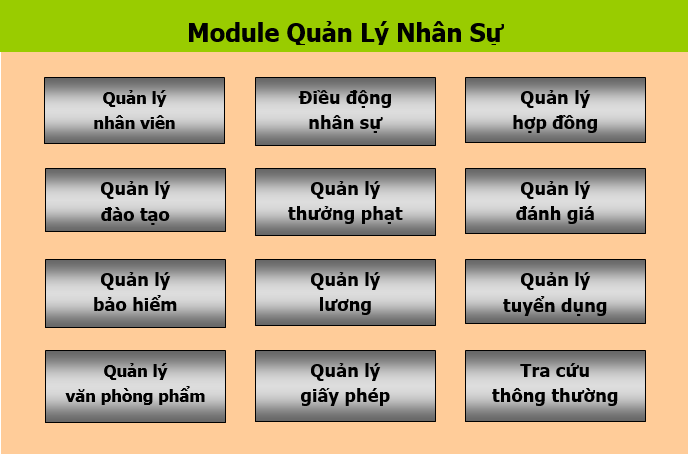
I. System Structure
II. System Diagram
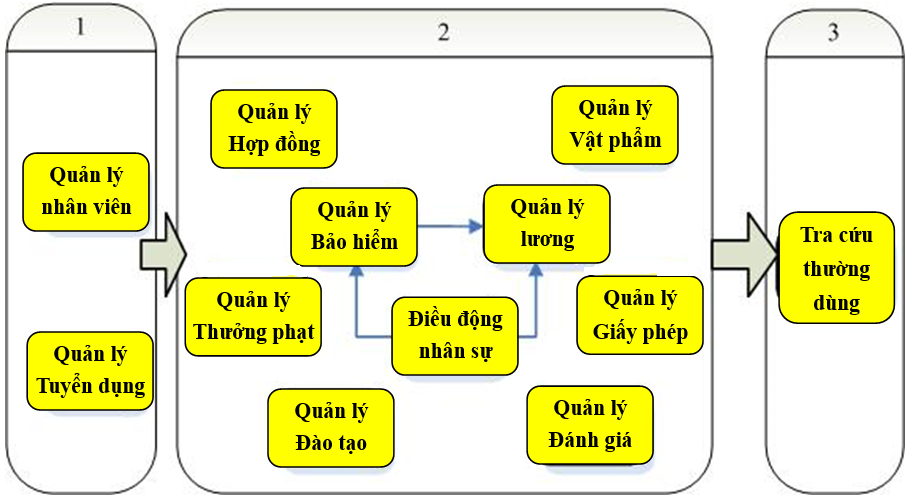
III. Functions and Operation Guide
1. Employee Management

The employee information table is the foundation of the entire system. It records basic information, resumes, social relations, work experience, educational background, rewards and punishments, professional title evaluations, certificates, and transfer records. This data can be entered directly into the employee table or synced automatically from related functional modules.
The personnel profile card is designed for standard printing (stored as paper records). When creating a new profile card and selecting an employee's name, other details will be automatically generated and ready for direct printing.
2. Contract Management

Implemented functions: managing contract information and looking up employee policies.
3. Personnel Transfer

After filling in an employee's transfer information on the transfer form, the new department, new position, and new salary details will be automatically refreshed in the employee information table.
If you record an employee's resignation, the system will automatically clear relevant data or mark them as "resigned" across the HR, Insurance, Contract, and Salary modules. This is crucial to prevent incorrect salary payments to departing employees.
4. Insurance Management

First, set up common insurance types (such as housing provident fund, pension, medical, unemployment, work injury, and maternity insurance) and configure their respective rates. Each company can adjust these rates based on actual contribution conditions.
After setup, managers can register the insurance status of employees in the insurance information form.
5. Salary Management

Before executing salary management, basic parameters must be configured: personal income tax thresholds, tax rates, piece-rate products, time-based processes, and commission items.
Once completed, the system automatically summarizes time wages, piece-rate wages, and commissions into the employee salary card. If you need to print payslips, simply create a new payslip form, select the date, and the system will generate payslips for all employees in that month.
6. Training Management

Function: Record information related to internal and external training plans and results.
7. Assessment Management

Record various employee performance assessments (KPIs/OKRs) and capability evaluation items.
8. Reward and Punishment Management

Configure reward and punishment items, types, and amounts in the shared setup table; then apply and register them directly in the respective employee's record.
9. Certificate and License Management
Record comprehensive employee certificate information, including: language proficiency certificates, computer skills certificates, driver's licenses, professional practice licenses, etc. Users can add new certificate types as needed.
10. Recruitment Management

Create recruitment plans. If suitable candidates cannot be hired immediately, the system allows you to register high-potential candidates into a "Talent Reserve" database for future campaigns.
11. Item Management

Company assets and items must be registered in the item information table before they can be issued or returned. When an item is issued (used), the inventory quantity is automatically deducted, and conversely, it increases when returned.
12. Common Queries

- (1) Expiring Contracts: Automatically queries and highlights in red the employees whose contracts will expire within the next 2 months (the number of months can be customized).
- (2) Reward/Disciplinary Alerts: Highlights personnel in red whose number of penalties or rewards exceeds a warning threshold (e.g., more than 5 times).
- (3) Assessment Info Query: Supports free combination of 4 filtering criteria to extract precise evaluation data.
- (4) Filter by Certification: For example, extract a list of all employees holding a driver's license from the certificate module.
- (5) Multi-condition Personnel Query: Freely combine up to 6 filtering conditions to export an exact personnel list based on complex requirements.